The Pattern
You already know how this goes.
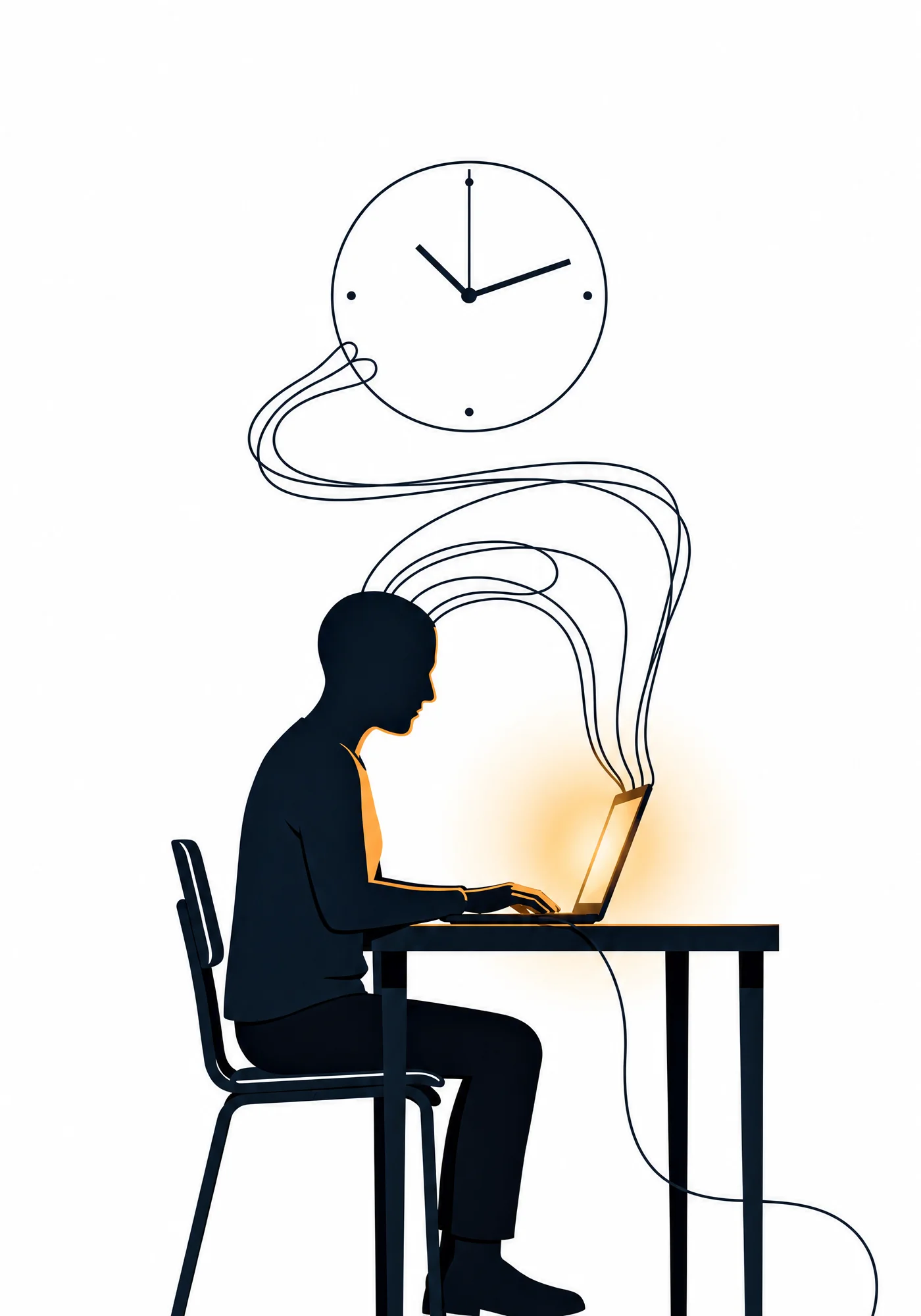
The day is technically over. Your brain opens the same tab anyway.
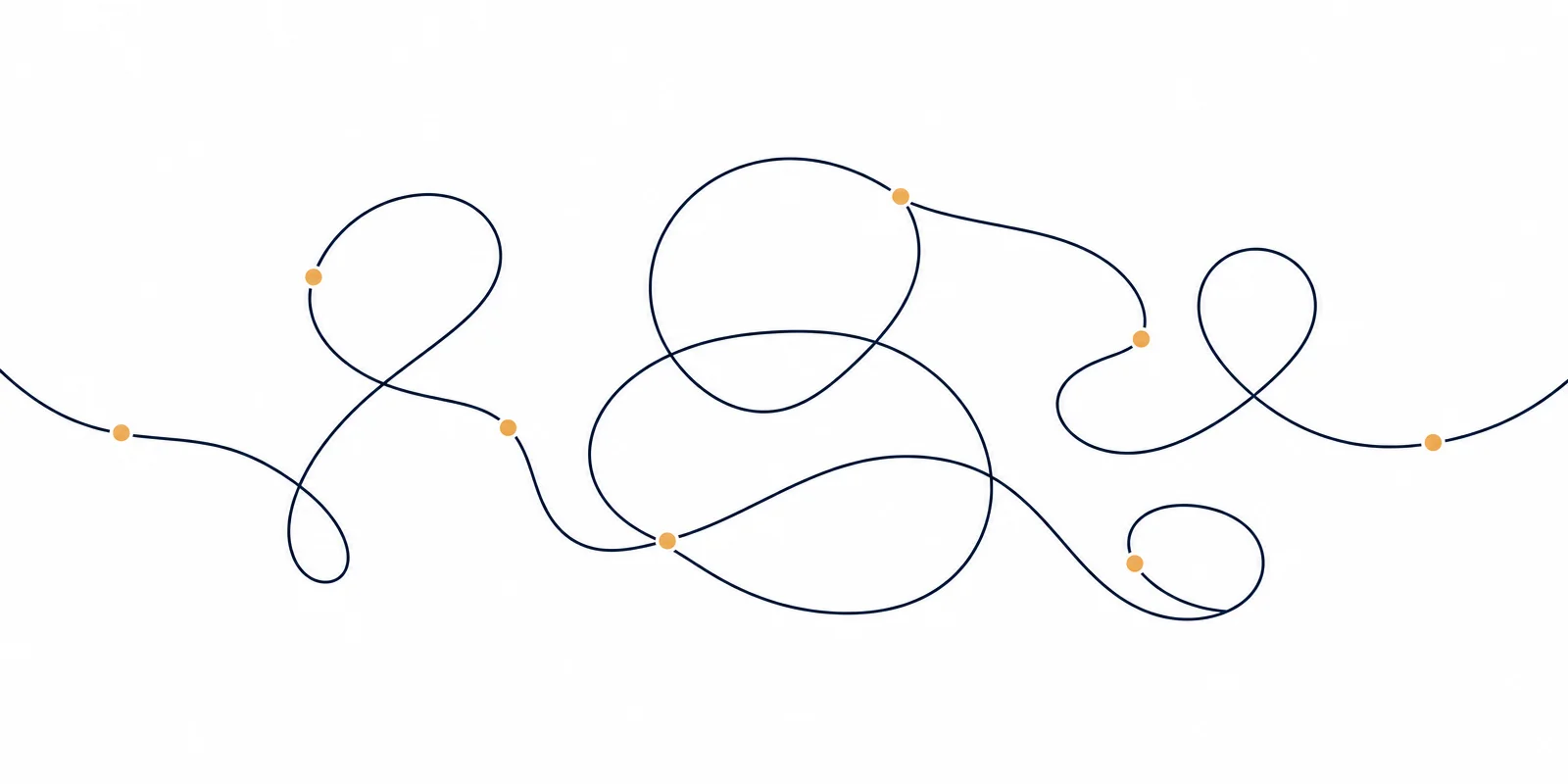
Figure 7.1 — The Work Loop Map, from Chapter 7
You're finally in bed. And yet: did I sound stupid in that meeting? Why did it go quiet after I spoke? Was that thumbs-up actually fine, or was it "fine"? One more minute becomes forty, and the clock reads 3:00 a.m.
This isn't a personality flaw. Work is social evaluation, uncertainty, and status, all at once — and modern work environments are almost perfectly designed to trigger the loop: subtle feedback, constant ambiguous communication, silence that can feel like a verdict.
“You're not broken. You're not weak. You're not ‘too sensitive.’”
— Maren Cole, A Note to the Overthinking Professional01 · Trigger
A moment happens
Silence, a flat reply, "can we talk tomorrow?"
02 · Story
Your brain assigns meaning
"They think I'm incompetent."
03 · Body alarm
Your nervous system reacts
Tight chest, restlessness.
04 · Replay
Your brain re-runs the moment
Searching for certainty.
05 · Sleep disruption
You can't fully downshift
The day still feels open.
06 · Hypervigilance
Tomorrow, you scan for confirmation
Which restarts the loop, back to Trigger.
The Method
A new default response — so the replay doesn't own your night.
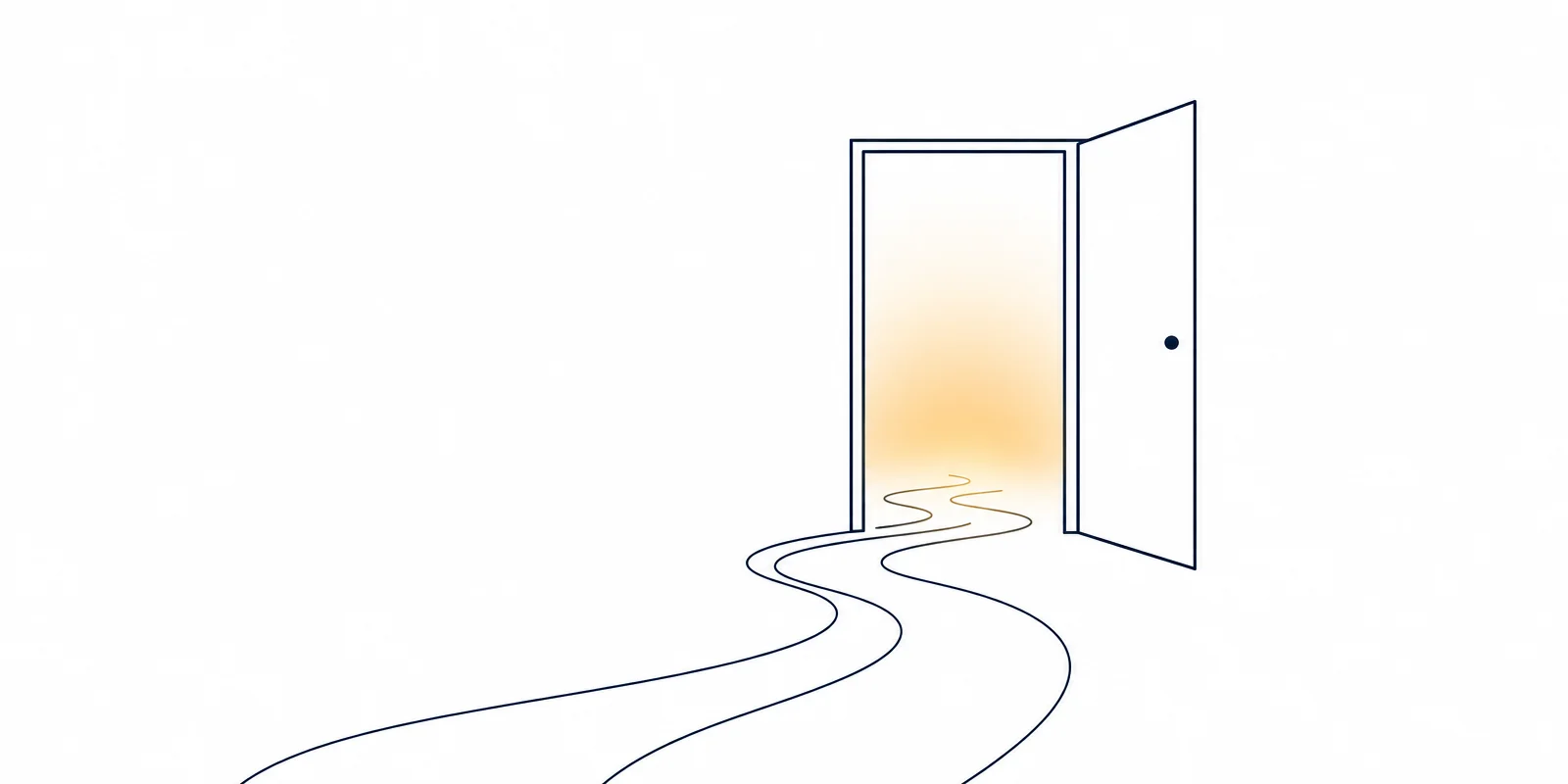
Most people respond to a spiral by arguing with the thought, or by letting it run until they feel better. Both fail at 1 a.m. R.E.S.T. doesn't ask you to win an argument. It asks you to change gears.
R
“I'm looping.”
E
“Here's the story my brain is telling.”
S
“What are the actual facts and evidence?”
T
“Close for tonight. Choose the next small action (or no action).”
Inside the Book
A four-week program that ends the 3 a.m. replay — and the tools that make it stick.
Ten to twenty minutes a day at standard pace, five to ten on a busy week, two to five in crisis mode. Consistency beats intensity.
- 01
Recognize
Catch the loop earlier than you usually do. Not fix it — just catch it.
- 02
Extract
Name the story your brain is telling, separate from the facts of what happened.
- 03
Scan the Evidence
Build a more accurate picture — the wins and neutral outcomes your brain deletes by default.
- 04
Transition Out of Work Mode
Make closure — not a blank mind — the new normal, with a ten-minute nightly ritual.
Who Wrote This
Maren Cole
Maren Cole writes about workplace psychology and practical, structured tools for managing work-related anxiety and rumination. The R.E.S.T. Method™ is built on a simple premise: most overthinkers don't need to think less — they need a reliable way to close the thinking they've already done.
Questions Before You Start
Questions before you start.
Why do I replay conversations in my head after work?
Because your brain didn't get a clean ending. When feedback is vague or a reaction is unclear, your mind treats it like an unfinished task and keeps trying to resolve it — usually by replaying the moment and assuming the worst version of it. It's not a character flaw. It's a very common response to ambiguity.
Why does this get worse at 3 a.m.?
At night there's nothing left to distract you, your energy is low, and your brain still wants to close the day before it lets you sleep. So it grabs the most unresolved moment from today and tries to finish the story — right when you have the least capacity to think clearly about it.
Is it normal to spiral over an unclear Slack message from my manager?
Yes — a short reply or a delayed response gives your brain almost nothing to work with, and it fills that gap with fear by default. The book's Scripts Library has a specific line for exactly this moment.
What is post-meeting rumination?
It's the clinical term for what this book calls "the loop" — the tendency to mentally replay a work interaction after it's over, reviewing what was said and assuming the worst about how it landed.
How is this different from a general stop-overthinking workbook?
Most overthinking workbooks are built for anxiety broadly. This one is built for one specific moment: the replay that starts after work — a meeting, a message, a silence — and follows you into the night. R.E.S.T. is four steps, not a general toolkit, because the goal isn't insight. It's closing the day.
Is this a substitute for therapy?
No. It's an educational, practical workbook — not therapy, and not a diagnosis. If your sleep has been badly disrupted for weeks, you're using alcohol or drugs to cope, or you feel unsafe, please add professional support alongside this program. If you're ever in immediate danger, contact your local emergency number or a crisis line right now.